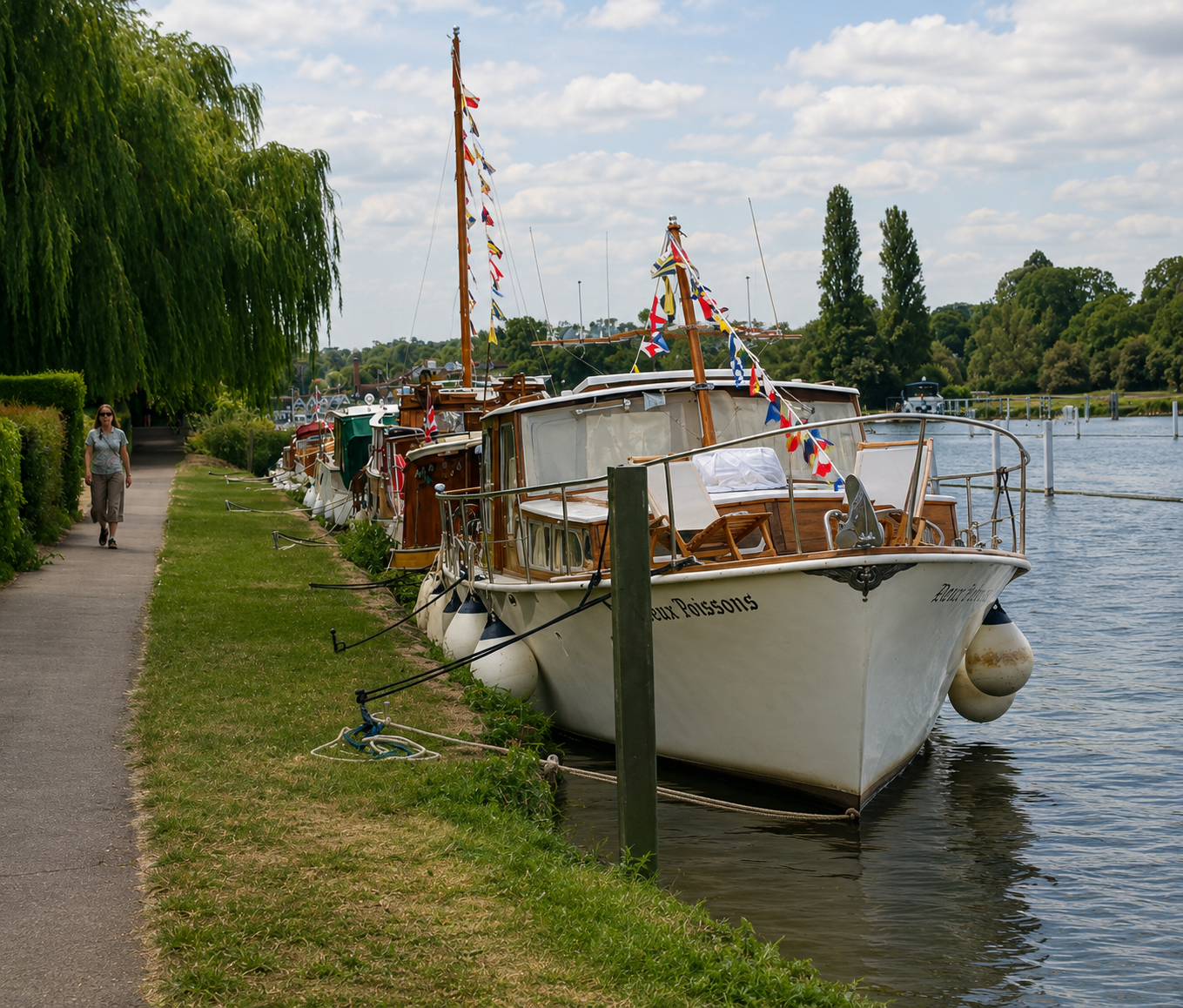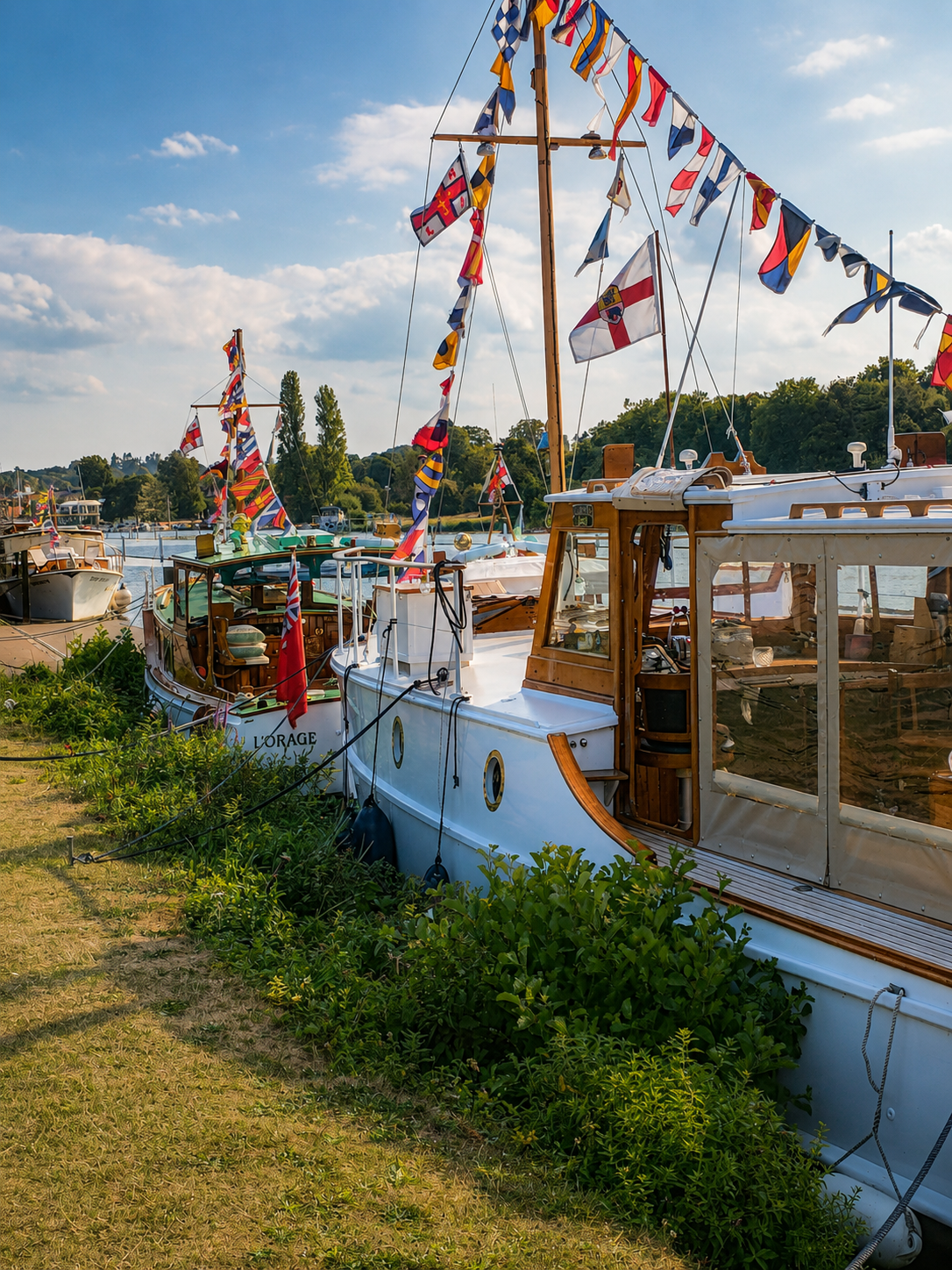
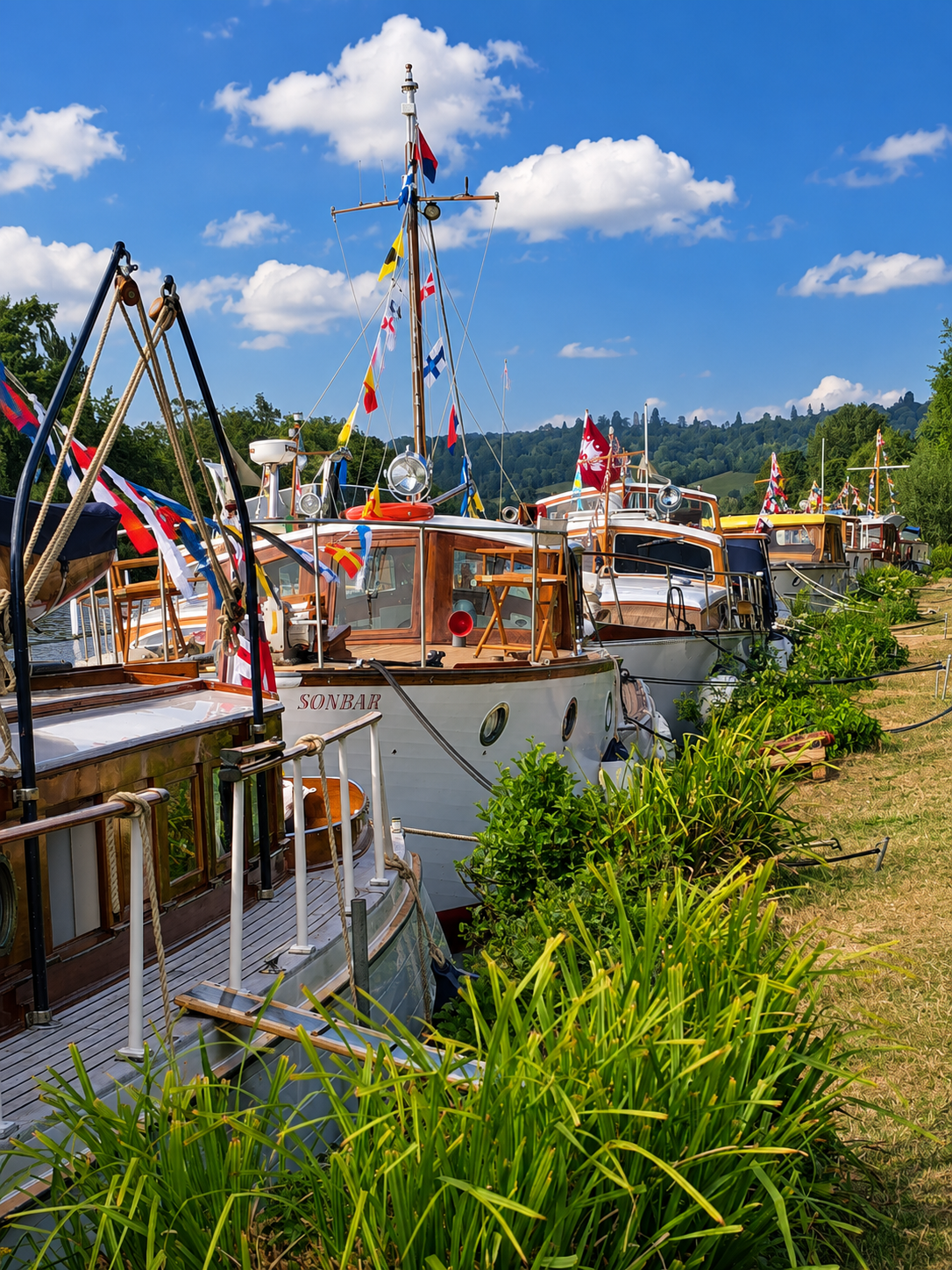
There is something rather special about seeing a riverbank filled with gleaming varnish, polished metal work and beautifully cared-for vintage boats.
The Thames Vintage Boat Club was founded at Old Windsor in March 1983, with the aim of bringing together traditionally built craft, encouraging their restoration, maintenance and, importantly, their continued use. The Club also works to preserve the history of traditional boats on the Thames.
More than four decades later, it has around over 500 members and more than 250 boats — including some remarkable examples of Thames boatbuilding and restoration.
Deux Poissons and the TVBC
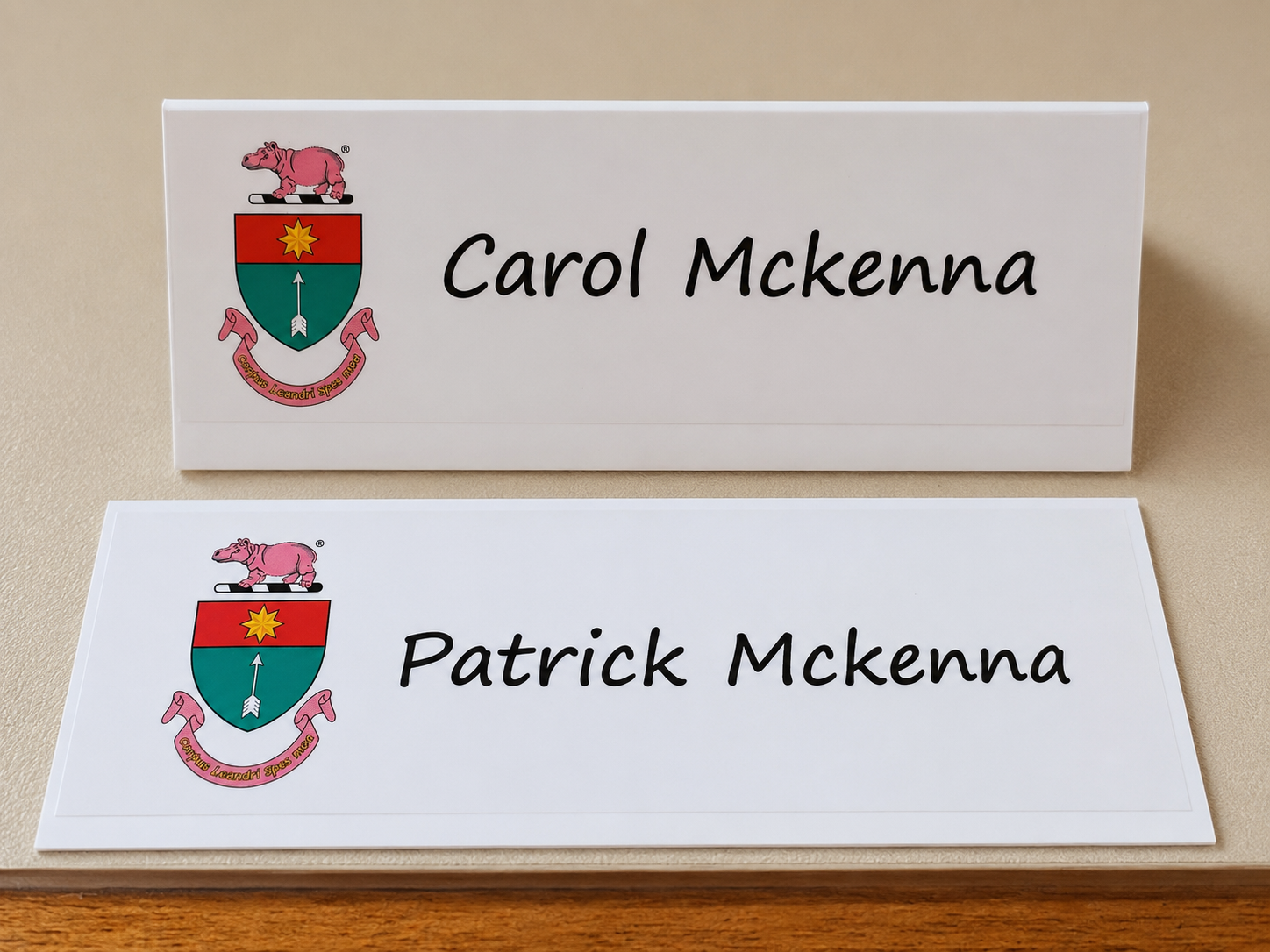
Patrick and I joined the Thames Vintage Boat Club in 2025, although, as we later discovered, Deux Poissons' association with the Club goes back much further.
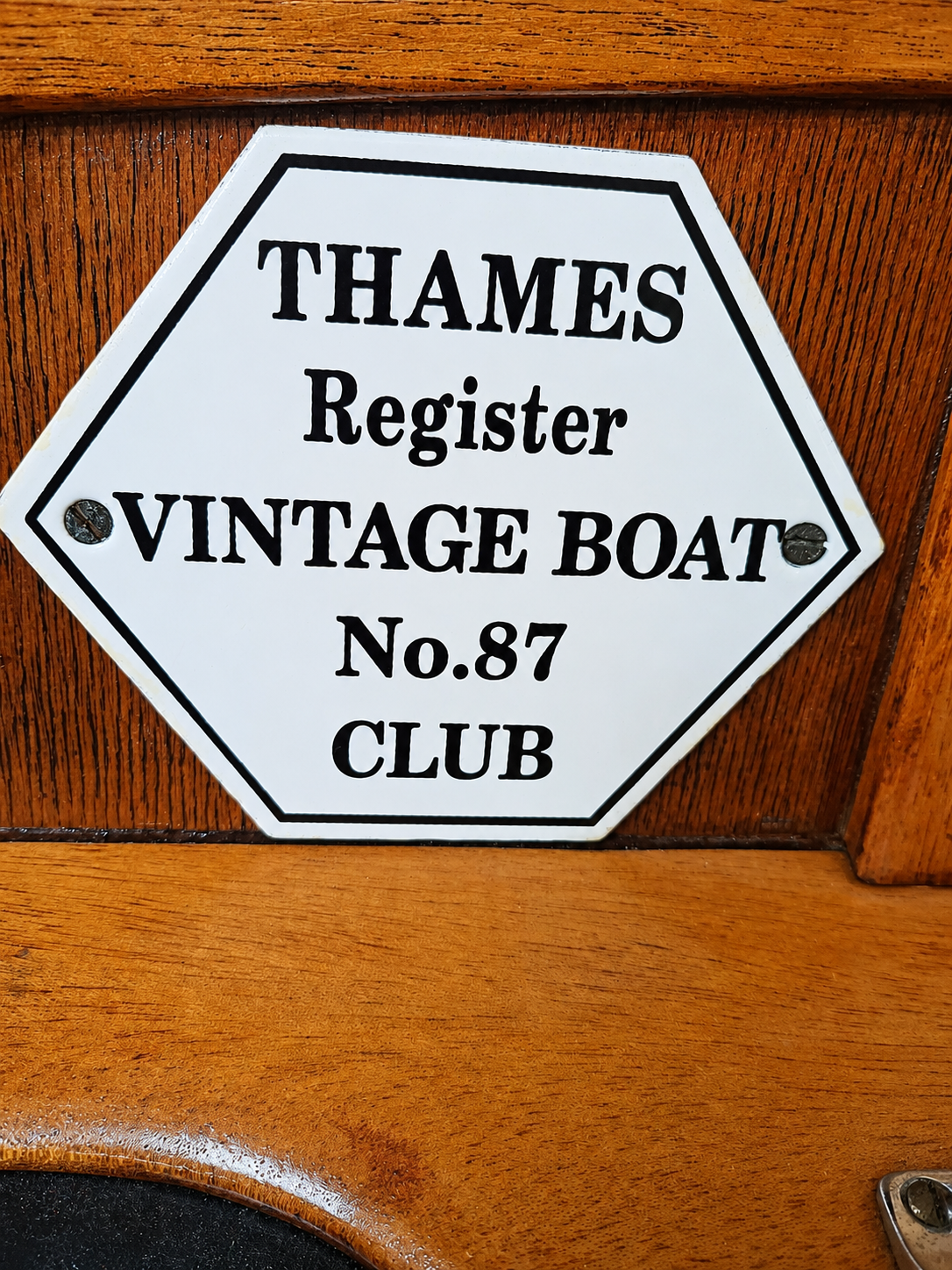
When we bought her, there was already a TVBC badge aboard: Vintage Boat No. 87. We had always been curious about it, so when we began our journey up the Thames, we made some enquiries.
We discovered that Deux Poissons had joined the TVBC in 2006, when she was owned by Mike Phillips, a longstanding member of the TVBC committee.
Interestingly, Deux Poissons didn't actually meet the Club's usual inclusion criteria. However, the committee voted to accept her because of her appearance and exceptional lineage as a Royal Van Lent design. She was registered as NVIN 087 — the number she still carries aboard today.
That little plaque suddenly had rather more meaning.
We always enjoy a rally. They seem to involve spending about 50% of the time admiring everyone else's boats and appreciating just how much work goes into keeping them beautiful — and the other 50% sharing the horror stories about what it took to get them there!
This was also our first opportunity to properly meet many of the members of the Thames Vintage Boat Club, and from the moment we arrived we felt incredibly welcome. There was an almost immediate sense of belonging — perhaps that's what happens when you put a group of people together who share a love of old boats and an understanding of everything that comes with keeping them alive. Conversations were easy. There was always another boat to admire, a restoration to discuss, a problem someone else had encountered or a solution someone had discovered. And, of course, there were the shared traumatic experiences that seem to come as standard with owning a classic boat — the unexpected leaks, mechanical failures, seemingly straightforward jobs that become enormous ones, and the inevitable question: “How much did that cost?!”
This gathering was particularly special.
Twenty-two boats assembled along the Remenham bank in front of the Upper Thames Rowing Club, creating a wonderful line of varnish, paint, polished fittings and classic shapes.
When we're travelling up and down the Thames in Deux Poissons, it can sometimes feel as though boats like ours are becoming increasingly rare — survivors from another era on a river that has inevitably changed around them.
Then you arrive at a rally like this. Suddenly you're surrounded by them.
A Dora Blu, Silver Bird, New Venture, Miss Coquette, Deux Poissons, Sonbar, Lazy Days, Crest, Louis Phillipe, Nydia, Betsie-Jane, Lucy Ann, Lady Beatrice, Pourquoi Pas, Karinda, Little Ann II, L'Amour, Dabchick, L'Orage, Consuta, Seran and Margo II.
Among the gathering were also some of the Dunkirk Little Ships, bringing with them another extraordinary piece of British maritime history and valor.
It was a wonderful reminder that these classic boats haven't disappeared. There are still many of them out there, being used, maintained, restored and, above all, loved. Their owners aren't simply keeping old boats afloat. In their own small way, they're hanging on to history.
For the Commodore's drinks, boats were invited to dress overall, flying their signal flags from bow to stern. With the Remenham bank already packed with vintage boats, the flags added another splash of colour and made an impressive sight across the river. Saturday evening brought everyone together for a BBQ, followed on Sunday morning by breakfast rolls before lunch at the historic Leander Club.
As enjoyable as the food and socialising were, much of the pleasure came simply from wandering along the bank, looking at boats, talking to their owners and hearing their stories.
Every boat had one.
And, invariably, every restoration had several.
Perhaps that was the lasting impression we took away from the weekend. Deux Poissons may be unusual. Her history, her construction and her Royal Van Lent origins make her a little different from many of the traditional Thames craft around her. But this weekend she didn't feel unusual at all.
She was simply No. 87, sitting among a remarkable collection of old boats whose owners have made the same slightly irrational decision we have: to keep looking after them, fixing them, polishing them, spending money on them, occasionally despairing of them — and continuing to take them out onto the river.
And long may that continue.